DESK FEATURE
Spirits, Harvests and Dancing Villages: The Folk Culture of Japan
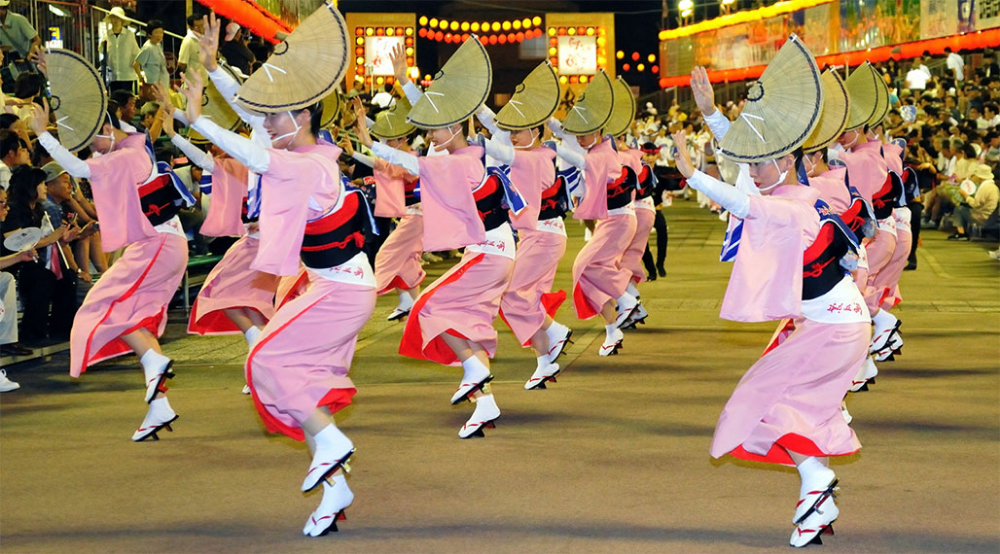
Beyond the temples of Kyoto and the neon of Tokyo lies another Japan, one shaped by rice fields, mountain villages and fishing coasts. This is the world of folk culture, or minzoku, where traditions were passed down not by emperors or scholars but by farmers, fishermen and families. Its songs, festivals, tales and crafts reveal how ordinary people understood nature, community and the unseen forces around them.
A Culture Born of Rice and Seasons
For most of Japan’s history, life revolved around rice. Planting in spring, tending in summer and harvesting in autumn created a calendar that governed work, rest and ritual. Because growing rice depended on shared irrigation and labour, villages developed strong bonds of cooperation, and many folk customs aim to strengthen that unity.
The beliefs behind these customs are rooted in Shinto, the indigenous tradition that finds sacred presence, or kami, in mountains, rivers, trees and rice itself. Farmers prayed to the field deity for good crops and thanked the gods after the harvest. These practices were woven with Buddhist ideas, producing a blended folk religion in which ancestors, nature spirits and household guardians all had a place.
Matsuri: Festivals of the Community
The most visible form of folk culture is the matsuri, or festival. Almost every community holds one, usually tied to a local shrine. Participants carry portable shrines called mikoshi through the streets, accompanied by drums, flutes and chanting, while stalls sell food and games. The aim is to honour the local deity, ask for blessings and renew community bonds.
Some festivals have become famous far beyond their regions. Aomori’s Nebuta festival features enormous illuminated paper lanterns, Kyoto’s Gion festival dates back more than a thousand years, and Tokushima’s Awa Odori draws crowds of dancers who chant while moving through the streets. Yet thousands of smaller village festivals survive quietly, each with its own costumes and customs, kept alive by local residents.
Dancing for the Dead: Obon and Bon Odori
Each summer, Japanese families observe Obon, a Buddhist-influenced festival honouring ancestors. Families clean graves, light lanterns to guide spirits home and gather for meals. The folk dance known as bon odori is a central feature. Villagers form circles around a raised drum platform, moving in simple, repeating steps that anyone can join.
The dance is both a welcome to the returning spirits and a joyful community event. Each region has its own songs and movements, some dating back centuries. In modern towns, bon odori is a social highlight, with people in light cotton yukata dancing under paper lanterns.
Folk Songs and Performing Arts
Japan’s min’yō, or folk songs, grew out of work and daily life. There are songs for rice planting, fishing, hauling, and drinking, often with distinctive vocal ornamentation and call-and-response patterns. Instruments such as the shamisen, shakuhachi flute and taiko drum accompany the singing. Regional styles differ greatly, from the powerful voices of northern fishing communities to the lighter melodies of the south.
Local performing arts include kagura, ritual dance-dramas performed at shrines, and shishi-mai, lion dances meant to drive away evil spirits and bring good fortune. Many were designated as intangible cultural properties by Japan, and in several cases by UNESCO, helping communities sustain them.
Tales of Yōkai and Spirits
Japanese folklore is famous for its colourful supernatural beings. Yōkai are creatures ranging from the mischievous to the menacing. The kappa, a water imp with a dish on its head, is said to pull people into rivers. The tanuki, a raccoon dog, shapeshifts and plays tricks, and the kitsune, or fox, can charm or deceive humans and also serves as a messenger of the rice deity Inari.
Tales such as Momotarō, the boy born from a peach who defeats ogres, and Urashima Tarō, who visits an undersea palace and returns to a changed world, were told to children for generations. These stories teach courage, kindness and the dangers of greed, while also explaining mysterious features of the landscape. The scholar Yanagita Kunio, often called the father of Japanese folklore studies, collected such stories in the early twentieth century, notably in Tōno Monogatari (1910).
Houses, Crafts and the Beauty of Use
Folk culture also shows in everyday objects. Traditional farmhouses, known as minka, include the thatched gassho-style houses of the mountain regions, built with steep roofs to withstand heavy snow. Villagers also produced pottery, textiles, baskets and tools shaped by need and local materials.
In the 1920s, the philosopher Yanagi Sōetsu launched the mingei, or “folk craft,” movement, arguing that humble handmade items possessed a natural, unselfconscious beauty. His ideas encouraged appreciation of regional crafts and helped preserve techniques such as indigo dyeing, ceramic making and weaving.
Customs Around Life and Seasons
Folk traditions mark life’s passages. Children are taken to shrines at ages three, five and seven in the Shichi-Go-San ceremony, and New Year is welcomed with pounded rice cakes, pine decorations and visits to shrines. In February, people scatter roasted soybeans during Setsubun while shouting for demons to leave and good fortune to enter. Star Festival (Tanabata) sees people hanging paper wishes on bamboo branches, inspired by a legend of two star-crossed lovers.
Challenges and Renewal
Japan’s rapid urbanisation and ageing rural population have placed folk traditions under pressure. Many villages face depopulation, and some festivals have struggled to find enough participants to carry shrines or perform dances. Younger generations often leave for cities, and customs tied to farming lose meaning as agriculture changes.
Yet there are signs of renewal. Local governments, volunteer groups and schools teach traditional dances and songs, while festivals invite visitors to join. Cultural tourism, folk museums and open-air village exhibits introduce new audiences to heritage. Popular culture, from anime to games, has also revived interest in yōkai and folk tales, linking the old stories with new media.
Japanese folk culture is not a relic but a living conversation between people and their environment. In its festivals, songs and stories, communities express gratitude to nature, remember their dead and strengthen their bonds with one another. As Japan changes, these traditions face uncertainty, but their enduring appeal suggests that the human need for shared celebration and meaning remains strong. To witness a village festival at dusk, drums echoing and lanterns glowing, is to glimpse a Japan that has endured quietly for centuries.