DESK FEATURE
From Temple Bells to Taiko Thunder: The Sound of Japan
Japanese music is often described through its silences as much as its sounds. A single plucked string, a breathy flute note or a drumbeat that echoes through a shrine courtyard can carry as much meaning as a full orchestra. Over some fourteen centuries, Japan has absorbed influences from Asia and the West, then reshaped them into forms that are unmistakably its own. Today the country’s musical world stretches from court ensembles of ancient lineage to global pop, and the dialogue between the two defines its modern identity.
Roots in Ritual and Court
The earliest Japanese music was bound to ritual. Shinto ceremonies used drums, flutes and sacred dances known as kagura to please the kami and mark the seasons. Beginning in the sixth and seventh centuries, Buddhism and continental culture brought new sounds from China and Korea, including instruments, notation systems and ensemble styles.
At the imperial court, these imports fused into gagaku, “elegant music,” widely regarded as the oldest continuously performed orchestral tradition in the world. A gagaku ensemble combines the hichiriki (a double-reed pipe), ryūteki (a transverse flute), shō (a mouth organ with shimmering chords), plucked and struck strings, and large drums. The music unfolds slowly, with long sustained tones and carefully measured pacing. It is still performed by the Imperial Household and at major shrines, and gagaku was inscribed by UNESCO as an Intangible Cultural Heritage.
The Voices of Theatre
From the medieval period onward, music became inseparable from stagecraft. In Noh theatre, a small ensemble of flute and hand drums supports a chorus and actors whose slow, stylised movement and chant create an atmosphere of otherworldly stillness. The vocal sounds, punctuated by sharp calls known as kakegoe, give the drama its tension.
Kabuki, which emerged in the seventeenth century, brought a more popular and flamboyant music. Its stage uses nagauta songs accompanied by the shamisen, along with offstage ensembles that provide sound effects, from rain and wind to the clatter of wooden clappers, called hyōshigi, marking key moments. Bunraku puppet theatre pairs a chanter, or tayū, with a shamisen player in the narrative style called jōruri, in which a single voice portrays every character.
Instruments with a Voice of Their Own
Three instruments in particular have come to symbolise traditional Japanese music.
The koto, a long zither with thirteen strings and movable bridges, arrived from China and evolved into a refined solo and ensemble instrument. Its shimmering glissandos and delicate plucking can be both gentle and dramatic. Michio Miyagi, a blind composer working in the early twentieth century, helped bring the koto into modern repertoire while keeping its classical spirit.
The shamisen, a three-stringed lute played with a large plectrum, reached Japan from the Ryukyu islands in the sixteenth century. Its bright, percussive tone suited storytelling and folk songs. Regional styles, such as the vigorous Tsugaru-jamisen of northern Japan, feature virtuosic, rhythmic playing that has attracted an international audience.
The shakuhachi, a vertical bamboo flute, is linked to wandering Zen monks called komusō, who played it as a form of meditation. Its breathy, shifting timbres reflect an aesthetic in which a single note is considered a complete world. Today, shakuhachi players range from traditional masters to jazz and contemporary musicians.
Taiko: The Heartbeat of Japan
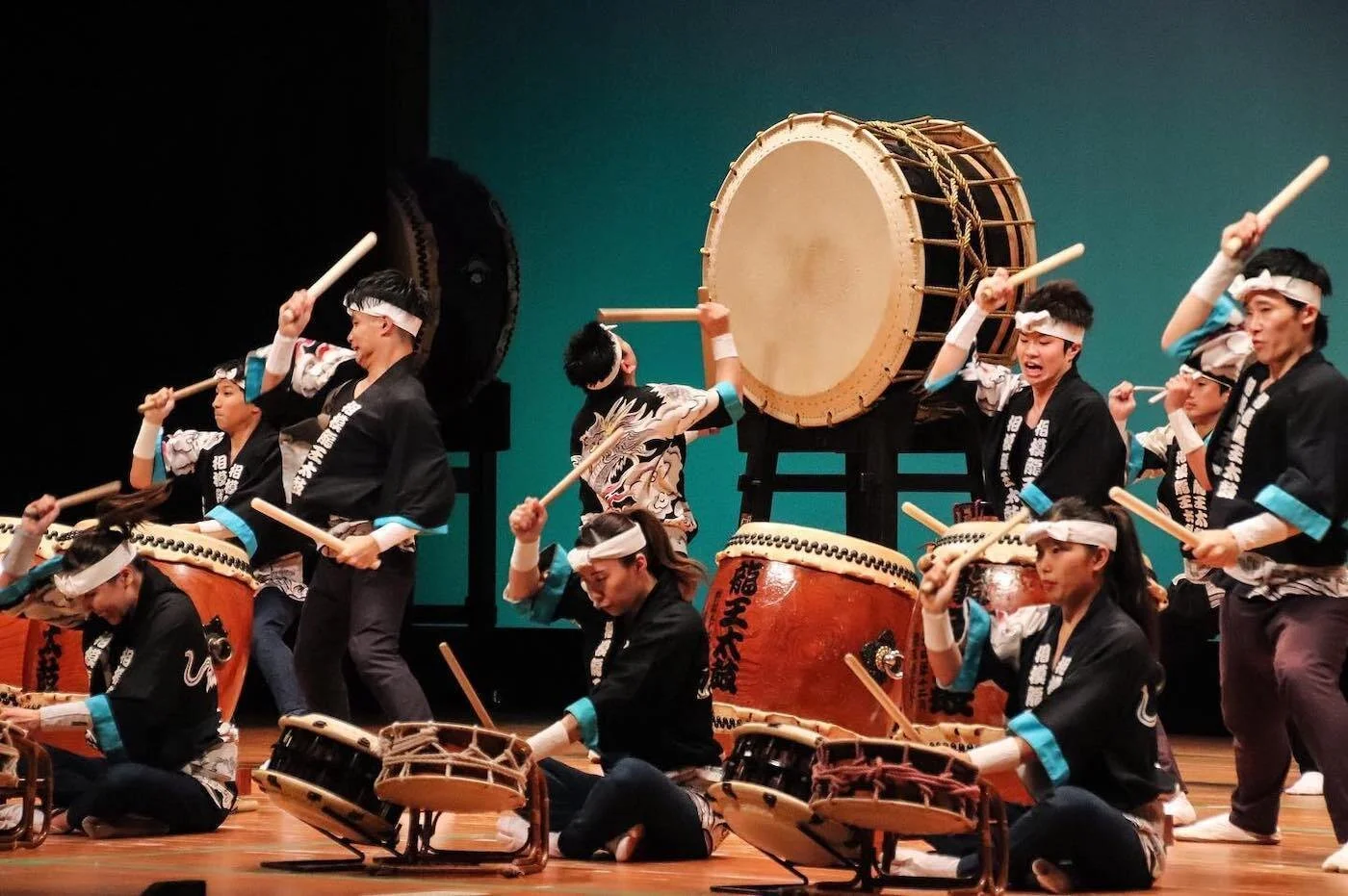
Few sounds are as powerful as taiko, the large Japanese drums. Historically used in religious ceremonies, war and village festivals, taiko were believed to carry the voice of the gods and to drive away evil spirits. In the postwar period, ensembles developed a new, theatrical performance style called kumi-daiko, combining athletic movement, synchronised rhythms and a range of drum sizes.
Groups such as Kodō, formed on Sado Island in 1981, brought taiko to concert halls worldwide. Today, taiko ensembles can be found in schools, community centres and festivals across Japan, as well as in the United States, Europe and elsewhere, where they have become a way for diaspora communities to connect with heritage.
Folk Songs and Local Traditions
Alongside court and theatre music, Japan has a rich body of folk song, or min’yō. These songs accompanied rice planting, fishing and festival dances, with melodies often built on pentatonic scales. Regional styles differ widely, from the plaintive voices of Hokkaido’s Ainu singers to the distinctive scale and sanshin lute of Okinawa. Preserving these traditions has become a task for local groups and cultural institutions as rural communities shrink.
Western Influence and the Modern Turn
After the Meiji Restoration of 1868, Japan opened to Western culture. Military bands, school songs and Western classical music entered public life, and the government made Western-style music education a national priority. Conservatories were founded, and a generation of composers learned European techniques.
Out of this encounter came kayōkyoku, early popular songs that blended Japanese melodic sensibilities with Western harmonies, and enka, a sentimental ballad style with ornamented vocals. After the Second World War, jazz, rock and pop took hold. Composers such as Tōru Takemitsu sought to bring Japanese concepts of space and silence into modern concert music, writing works that placed traditional instruments alongside the orchestra.
J-Pop, City Pop and Global Reach
The late twentieth century saw the rise of J-pop, a broad label for commercially successful Japanese popular music. Idol groups, rock bands, electronic acts and singer-songwriters built a vast domestic industry. The 1980s brought “city pop,” a polished style with jazz and funk influences that later gained a new international following through streaming platforms.
Japan also became a centre for electronic music, video game scores and anime soundtracks. Composers working in games and animation created works that have been performed in concert halls around the world. Meanwhile, karaoke, invented in Japan in the 1970s, turned singing into a social activity that spread globally.
Keeping Tradition Alive
Despite this popularity, traditional music faces challenges. Many young Japanese grow up with more exposure to pop and Western classical music than to koto or shakuhachi, and the number of master performers is limited. The government has recognised leading artists as “Living National Treasures,” and schools have introduced traditional instruments into their curricula.
At the same time, musicians experiment boldly. Groups such as the Yoshida Brothers have reinterpreted Tsugaru-jamisen with rock and pop energy, while contemporary composers pair shakuhachi with electronic soundscapes. These collaborations suggest that tradition does not have to be preserved as a museum piece; it can evolve.
Japanese music culture reflects a country that has long balanced reverence for the past with curiosity about the new. A shrine ritual, a kabuki stage, a thundering taiko troupe and a pop concert all coexist, each expressing a different side of national life. In the pause between notes, in the resonance of a drum skin or the breath within a bamboo flute, listeners may sense an enduring Japanese aesthetic: that meaning often lives in space, and that sound, like the seasons, is always in motion.