DESK FEATURE
Mind, Body and Spirit: The Sports Culture of China

In a Beijing park at dawn, retirees move slowly through tai chi forms while others practise calligraphy with water on pavement, play table tennis on concrete tables or gather around a board of Chinese chess. A few hours later, millions of fans will tune in to watch a world-class badminton final or an esports tournament. Sport in China is not one thing. It is a layered inheritance in which ancient martial traditions, folk games and Confucian ideas of self-cultivation sit alongside state-backed Olympic ambition and a fast-growing consumer fitness market.
Wushu: Martial Arts and the Body as Philosophy
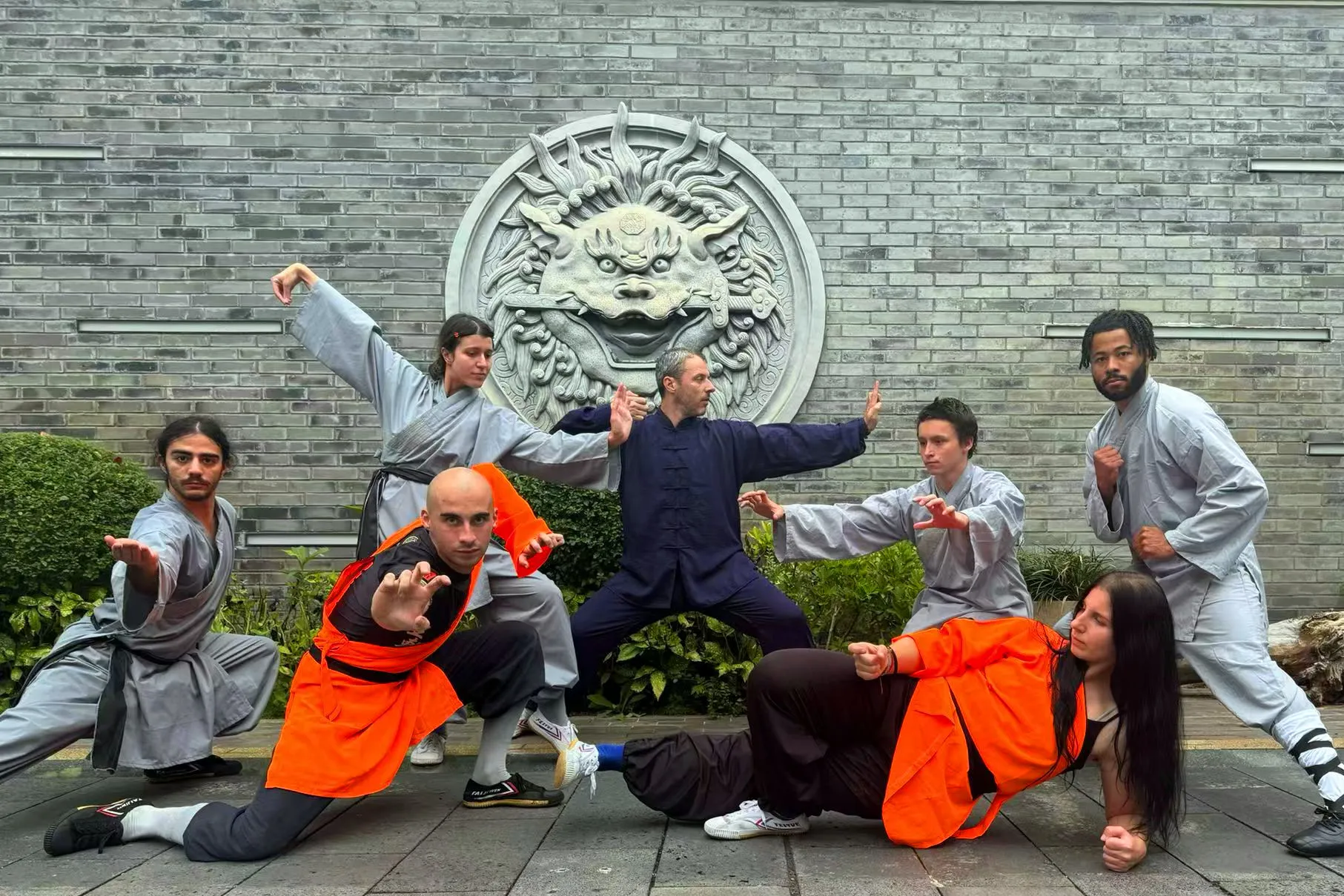
Chinese martial arts, collectively known as wushu or kung fu, are among the best-known cultural exports of the country. Their roots lie in ancient military training, village self-defence and religious practice. Over centuries, hundreds of styles emerged, which are commonly grouped into “external” systems such as Shaolin, emphasising power and agility, and “internal” systems such as tai chi, bagua and xingyi, which focus on breath, balance and fluid energy.
The Shaolin Temple in Henan Province, associated with Chan (Zen) Buddhism, became legendary for its fighting monks. Training there joins physical conditioning with meditation, reflecting a belief that mind and body cannot be developed separately. Tai chi, now practised by millions worldwide, is valued as gentle exercise and moving meditation. UNESCO inscribed tai chi on its list of intangible cultural heritage in 2020.
Wushu is also a modern competitive sport. Its performance form, taolu, features choreographed routines of strikes, kicks, jumps and weapons such as the sword and staff, while sanda is a full-contact fighting event. Though wushu has not yet been an Olympic medal event, it has appeared at the Asian Games and at world championships, and the International Wushu Federation continues to seek greater recognition.
Tug of War, Kites and Ancient Games
Chinese sport history stretches back thousands of years. One of the most remarkable ancient games is cuju, a form of ball-kicking played during the Han dynasty and later, which FIFA has acknowledged as an early ancestor of football. Other traditional pastimes include archery, horse riding, polo and tug-of-war, which was used in military training and festival entertainment.
Kite flying is another time-honoured activity. Believed to have originated more than two thousand years ago, kites were first used for signalling and later became works of art and recreation. Cities such as Weifang in Shandong host international kite festivals every spring, with enormous dragon-shaped creations floating above the shoreline. Shuttlecock kicking, or jianzi, is a simple game in which players keep a weighted feathered shuttle aloft with their feet, often seen in parks and school yards.
Board Games and Mind Sports
Intellectual contests hold a distinguished place in Chinese culture. Weiqi, known internationally as Go, is thought to have been played for more than 2,500 years. Together with the zither (qin), calligraphy and painting, it formed the “four arts” that cultured scholars were expected to master. Players claim stones on a grid in a contest of territory, patience and strategy.
Xiangqi, or Chinese chess, uses pieces such as generals, advisors, elephants and cannons on a board divided by a river. It remains hugely popular in streets, teahouses and parks, with spectators gathering around passionate games. Mahjong, a tile game for four, plays a social role at family gatherings, especially during Spring Festival. Competitive professional Go players such as Ke Jie have become celebrities, and the 2016 match between South Korean champion Lee Sedol and the AI program AlphaGo drew enormous attention in China as well.
Dragon Boats and Festival Sport
Sport in China is deeply tied to seasonal festivals. The Dragon Boat Festival, held on the fifth day of the fifth lunar month, features team boat races in which crews paddle long, decorated vessels to the beat of a drum. Tradition links the festival to the poet Qu Yuan, who drowned himself in the Miluo River around 278 BCE, and villagers who raced out in boats to save him or to keep fish from his body. Today, dragon boat racing is a global sport, with international federations and competitions held across Asia, Europe and North America.
Other festival-linked activities include lion dancing, which demands acrobatics and teamwork, and stilt walking, once used in village celebrations. During the Lantern Festival and Spring Festival, communities hold folk dances, kite flying and lively performances that blur the line between sport, theatre and ritual.
Table Tennis: The Unofficial National Sport
Few sports are as closely connected with China’s modern identity as table tennis, known as pingpang. Introduced in the early twentieth century, it became a national passion after the founding of the People’s Republic. Its political importance was highlighted in 1971, when an American team visited China in what became known as “ping-pong diplomacy,” helping to ease relations between the two countries.
Chinese players have dominated international competition for decades, winning large numbers of Olympic and world titles. The sport’s success rests on a vast base of schools, clubs and training academies. A table tennis table is a common sight in parks, offices and neighbourhoods, and the sport is regarded as a source of national pride.
The Olympic Project and State Sport
The modern sports system in China was shaped by a strategy that treats athletic success as a national goal. Beginning in the 1950s, the state set up sports schools and specialist training centres, which identify talented children and train them intensively. After China returned to the Olympic movement in 1984, results improved rapidly. At the 2008 Beijing Olympics, China topped the gold medal table, a milestone that symbolised its growing global presence. It later hosted the 2022 Winter Olympics in Beijing, becoming the first city to stage both the summer and winter Games.
This system has produced champions in diving, gymnastics, weightlifting, badminton and shooting, as well as rising stars in skiing, skating and track and field. Critics note the heavy demands placed on young athletes and the limited attention to life after sport, and in recent years the government has encouraged reforms toward broader participation and athlete welfare.
Everyday Fitness: Square Dancing and Morning Exercise
Perhaps the most visible aspect of Chinese sports culture is the way ordinary citizens exercise in public. In parks and plazas, groups practise tai chi, ballroom dancing, group aerobics, badminton and fan dancing. Guangchangwu, or “square dancing,” in which groups of mostly middle-aged and older women dance to music in open spaces, has become a social phenomenon, although noise disputes sometimes arise.
Fitness has also entered the digital age. Running clubs, cycling groups, gym memberships and online exercise apps have boomed among younger urban professionals. The government’s “Healthy China” campaign promotes sports participation, and marathons have multiplied nationwide, with some cities holding events attended by tens of thousands of runners.
Basketball, Football and Esports
Western-origin sports have also taken root. Basketball enjoys enormous popularity, helped by the success of Yao Ming, who played in the NBA from 2002 to 2011 and became a national hero. Football remains a more complex case: China has a large fan base and ambitions to improve its national team, but results on the international stage have so far lagged behind public enthusiasm and investment.
Esports have emerged as a powerful new arena. Chinese players and teams compete at the highest levels in games such as League of Legends and Honor of Kings, and the country has a vast audience. Esports was recognised as an official medal event at the 2022 Asian Games in Hangzhou, held in 2023.
China’s sports culture is a layered conversation between past and present. In its martial arts, it preserves a philosophy that treats the body as a vessel for moral and spiritual development. In its board games and festival contests, it honours patience, strategy and community. In its stadiums and training academies, it pursues international achievement. And in its public parks, it shows a quiet, everyday devotion to staying active together. Whether a person is lifting a dragon boat paddle, moving a Go stone or practising a tai chi form at sunrise, the aim is the same: to cultivate balance in body, mind and society.