DESK FEATURE
A Season Measured in Petals: The Culture of Sakura in Japan
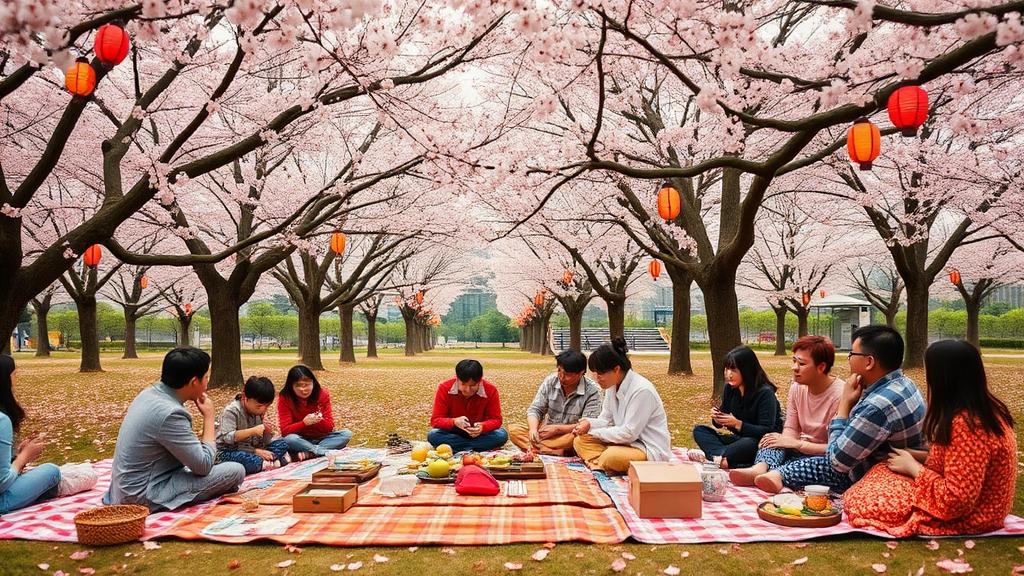
Every spring, a quiet drama unfolds across the Japanese archipelago. Buds swell on bare branches, then burst into clouds of pale pink and white, and within about a week the petals fall like snow. The cherry blossom, or sakura, is far more than a seasonal spectacle. It is a cultural calendar, a literary theme, a business forecast, a philosophy of impermanence and, for many Japanese, a reason to gather with friends and family. To understand sakura is to understand how Japan thinks about time, beauty and loss.
From Plum to Cherry: Early Origins
Flower viewing in Japan began long before cherry trees became the national favourite. In the Nara period (710–794), aristocrats admired plum blossoms, a custom borrowed from Tang China. The shift toward cherry blossoms took place in the Heian period (794–1185), when court poets and nobles began celebrating the native cherry as a distinctly Japanese flower.
The oldest collection of Japanese poetry, the Man’yōshū, already contains verses about cherry blossoms, but by the time of the Kokin Wakashū in the early tenth century, the flower had become the dominant image of spring. One of the earliest recorded hanami parties was said to have been held by Emperor Saga in 812 at the imperial court, a tradition that later spread through society.
Hanami: The Art of Gathering Beneath the Trees
Hanami, literally “flower viewing,” is the custom of picnicking beneath blooming trees. In the Edo period (1603–1868), the practice moved from the elite to ordinary people. The shogun Tokugawa Yoshimune is credited with planting cherry trees along rivers and in parks such as Asukayama and along the Sumida River, so that commoners could enjoy the blossoms.
Today, hanami is one of Japan’s most widely observed seasonal rituals. Families, friends and co-workers spread blue plastic sheets under the trees, share homemade bento boxes, and drink sake or tea. Junior employees are often sent early to reserve a spot, an annual routine in many companies. Traditional seasonal foods include hanami dango, three-coloured rice dumplings in pink, white and green, and sakura mochi, rice cake wrapped in a salted cherry leaf.
At night, yozakura, or “night cherry blossoms,” offers a different mood. Lanterns illuminate the branches, and the white petals seem to glow against the dark sky. Famous night viewing spots include Tokyo’s Chidorigafuchi moat and Kyoto’s Maruyama Park.
The Blossom Front
Because the flowers last only a short time, timing matters. Each year, the Japan Meteorological Agency and private firms issue a sakura zensen, or “cherry blossom front,” forecast that tracks the northward progress of the bloom. The season begins in Okinawa as early as January, reaches Tokyo and Kyoto in late March or early April, and arrives in Hokkaido in May.
Newspapers and television programmes follow these updates with great interest. Local governments, hotels and tourism companies plan around the forecasts, and the results influence consumer spending on food, travel and seasonal goods. The “first bloom” declaration for a reference tree, such as the one at Yasukuni Shrine in Tokyo, is treated as national news. The economic impact is large, as domestic and international visitors flock to parks and gardens.
Mono no Aware: Beauty in Impermanence
Behind the festive mood lies a deeper idea. The Japanese aesthetic concept of mono no aware, often translated as “the pathos of things,” refers to a gentle sadness at the passing nature of life. Cherry blossoms embody this feeling, for their beauty is intensified by their brevity. Many people say that the falling petals, called hanafubuki, or “flower blizzard,” are as moving as the full bloom.
This sensibility runs through classical literature. The twelfth-century monk-poet Saigyō famously wished to die beneath cherry blossoms in spring. In The Tale of Genji, cherry blossoms accompany scenes of love and loss. Such works established sakura as a symbol of life’s fragility, a theme that remains alive in modern novels, films and songs.
Sakura in Art and Craft
Painters and printmakers have long depicted cherry blossoms. Screen paintings of the Momoyama and Edo periods show blossoms in gold-leaf landscapes, and woodblock artists such as Hiroshige captured crowds beneath the trees in Edo. Sakura motifs are common on kimono, lacquerware, ceramics and tea utensils, often used in spring or for special occasions.
The flower also appears in everyday design. Seasonal sweets, packaging, stationery and even convenience-store products come in cherry-blossom editions each spring. Sakura-flavoured items, from tea to ice cream, make the season an edible experience.
A Symbol with Complex Meanings
Sakura’s symbolism has changed with history. Because the flower falls at the peak of its beauty, it has sometimes been associated with the samurai ideal of dying with honour. In the twentieth century, nationalist propaganda used this image to glorify sacrifice, and cherry blossoms were painted on military aircraft and in wartime songs. Today, scholars point to this period as a reminder that cultural symbols can be used for political purposes.
In the postwar era, sakura returned to a more peaceful role. It became associated with new beginnings, since Japan’s school and fiscal years start in April, when the trees bloom. Entrance ceremonies, first days at work and graduations frequently take place under cherry trees, giving the blossoms a role in personal milestones.
The Trees and Their Varieties
There are hundreds of cherry varieties in Japan. The Somei Yoshino, a pale pink hybrid developed in the Edo period, accounts for most of the trees planted in parks and along rivers. Others include the weeping shidarezakura, the deep pink yaezakura with layered petals, and the mountain cherry yamazakura, native to forests. Some trees are famous in their own right, such as the Jindai Zakura in Yamanashi, estimated to be around 2,000 years old.
In 1912, Japan gifted 3,000 cherry trees to the United States, which were planted around the Tidal Basin in Washington, D.C. The annual National Cherry Blossom Festival there reflects the lasting friendship and the global reach of sakura culture.
Modern Challenges
Climate change has begun to alter cherry blossom seasons. Records kept in Kyoto for over a thousand years show that full bloom now often occurs earlier than in past centuries, and in recent years some of the earliest dates ever recorded have been noted. Researchers worry about mismatched timing between blossoms and pollinators. Ageing trees, particularly the Somei Yoshino, which has a limited lifespan, require careful management and replanting.
Overcrowding at famous sites has also raised concerns about litter, trampling of roots and damage to trees. Local authorities now post etiquette guidelines, designate picnic zones and encourage visitors to appreciate the blossoms respectfully.
Sakura is, in the end, a lesson in attention. For a few days each spring, a whole nation pauses to look up, gather together and accept that beauty does not last. This blend of celebration and melancholy, of community and contemplation, makes cherry blossom culture one of Japan’s most distinctive contributions to the world. As long as the trees bloom, people will keep returning to their shade, reminded that the most precious moments are often the briefest.