Exim Bank Agricultural University Bangladesh
Special Interview with
Professor Dr. Md. Shafiqul Bari
Vice-Chancellor
EXIM Bank Agricultural University Bangladesh (EBAUB)
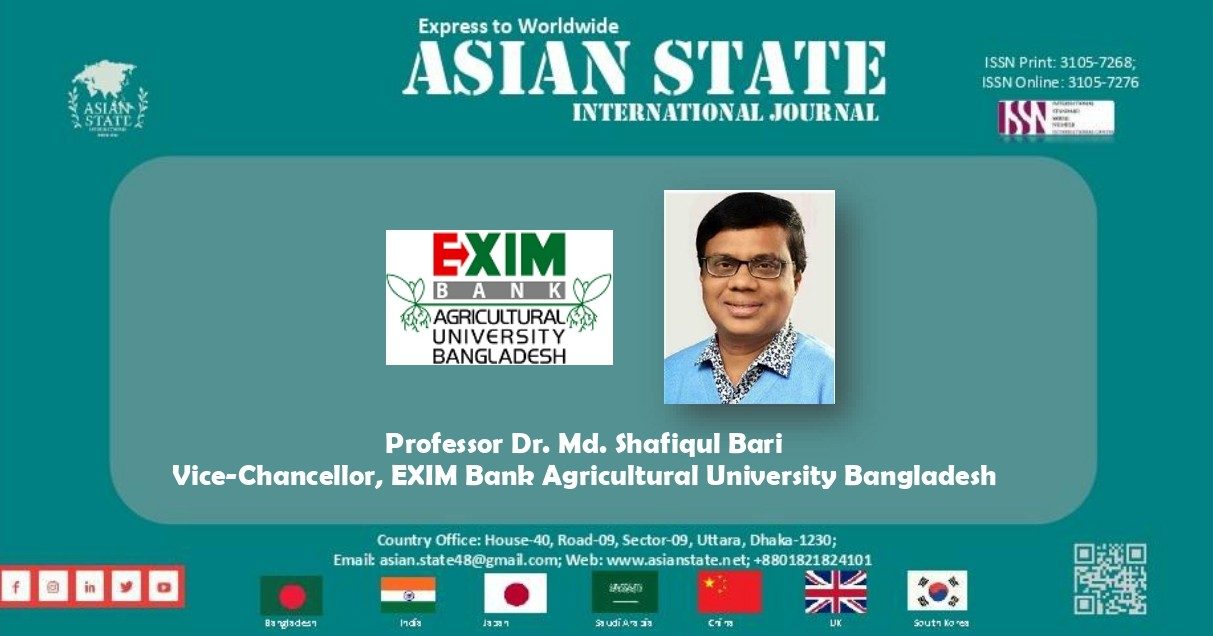
The conversation was conducted by Md. Imam Hossain, Country Editor of Asian State’s Bangladesh chapter.
Asian State-1. How would you assess the current state of higher education in Bangladesh?
Professor Dr. Md. Shafiqul Bari: Bangladesh’s higher education is currently undergoing a period of transformation. On one hand, student enrollment is increasing, new universities are being established, and technology-driven education is growing; on the other hand, challenges remain in quality, research, skilled faculty, and meeting international standards. I believe this is a period of opportunity. With proper policies, accountability, and academic quality improvement, Bangladesh can achieve a stronger position in higher education. Bangladesh University Grant Commission (UGC) & Bangladesh Accreditation Council (BAC) Already have been taking a member of imitative which can help to achieve this destination.
Asian State–2. How do you view the role of private universities in expanding higher education in the country?
Professor Dr. Md. Shafiqul Bari: Private universities play a very important role in expanding higher education. Public universities cannot accommodate all students, and in this regard, private universities provide an alternative and broadened access. They have particularly eased entry to higher education for city-based students. Additionally, by introducing new subjects, career-oriented programs, and technology-based curricula, private universities are making a positive contribution.
Asian State–3. What do you see as the main differences between public and private universities?
Professor Dr. Md. Shafiqul Bari: Public universities generally have long-standing traditions, large research frameworks, and offer education at lower costs. In contrast, private universities can make decisions relatively quickly, launch new programs based on market demand, and often lead in technology adoption. However, both share the same goal—providing quality higher education. Therefore, while differences exist, cooperation is more important than competition.
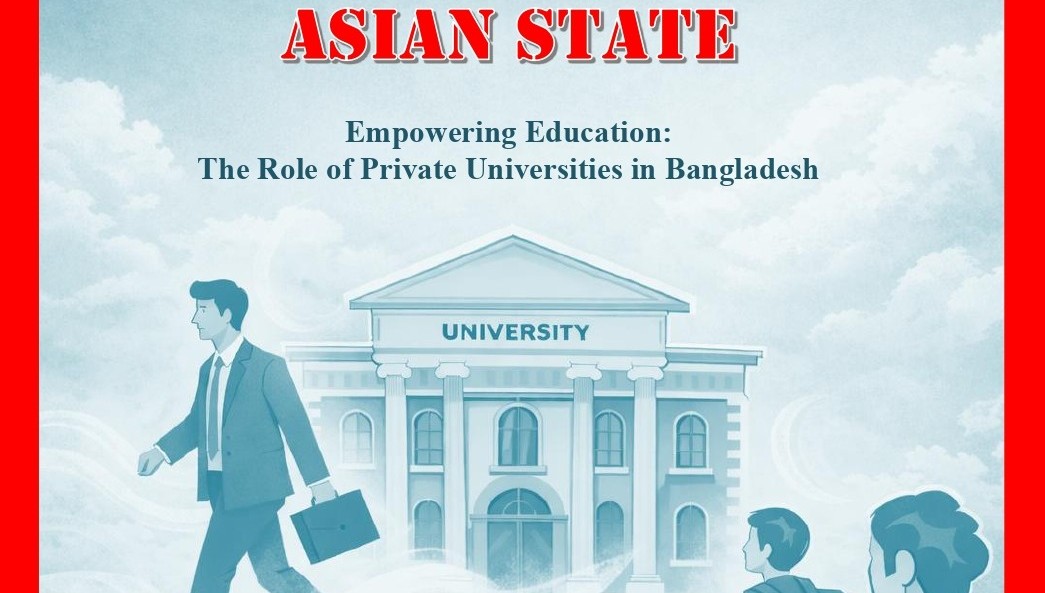
Asian State–4. How much do private universities contribute to increasing higher education opportunities for students?
Professor Dr. Md. Shafiqul Bari: In my view, private universities have made a significant contribution to expanding higher education opportunities. Each year, many students wish to enroll in universities, but public universities have limited seats. Private universities effectively fill this gap. They not only increase access but also, in many cases, provide specialized programs, evening classes, flexible academic structures, and career-oriented courses, offering students practical advantages.
Asian State–5. In your view, what is the greatest strength of private universities?
Professor Dr. Md. Shafiqul Bari: The greatest strength of private universities is their adaptability. They can rapidly introduce timely courses, design curricula aligned with industry demands, and remain flexible in technology adoption. They are also attentive to creating student-centered learning environments. If this strength is further supported by research, quality control, and faculty development, their role can become even stronger.
Asian State–6. In which areas do you think private universities need to improve?
Professor Dr. Md. Shafiqul Bari: Improvements are needed in cultivating a research culture, hiring full-time skilled faculty, developing permanent campuses, strengthening laboratories and libraries, and creating a high-quality academic environment. Many institutions remain teaching-focused and lag behind in research and innovation. Increasing international collaboration and academic productivity between faculty and students is also essential. In short, their goal should be to become centers of knowledge, not merely degree-awarding institutions.
Asian State–7. How can private universities play a more effective role in enhancing the quality of higher education?
Professor Dr. Md. Shafiqul Bari: Private universities can play a more effective role in quality improvement if they focus on updating curricula, faculty training, research grants, industry collaboration, and outcome-based education. Additionally, internal quality assurance cells must be fully functional. It is important to cultivate students’ critical thinking, communication skills, and problem-solving abilities. Quality education should not be confined to the classroom; it must be reflected throughout the entire academic culture.
Asian State–8. What is the potential of private universities in research, innovation, and technology-driven education?
Professor Dr. Md. Shafiqul Bari: The potential is very high. Private universities can rapidly adopt technology and are relatively flexible in implementing new ideas. If they increase funding for research, recruit skilled faculty and researchers, and develop joint projects with industry, they can create significant innovation opportunities. They can play a major role particularly in sectors such as information technology, health, agriculture, entrepreneurship, and artificial intelligence.
Asian State–9. How successful are private universities in creating linkages between industry and academia?
Professor Dr. Md. Shafiqul Bari: Some private universities are doing quite well, especially through internships, corporate connections, career support, and skill-based courses. However, overall, deeper and more structured linkages are needed. Research on industry challenges, joint labs, guest lectures, project-based learning, and continuous bridges to employment should be developed. The stronger the connection between education and industry, the more workplace-ready students will be.
Asian State–10. How well do private universities align their curricula with labor market demands?
Professor Dr. Md. Shafiqul Bari: Private universities are relatively advanced in this area because they can quickly update courses according to market demands. However, preparation should not be limited to employment alone—students’ mindset, leadership, language skills, research capability, and ethics must also be developed. As the job market changes rapidly, curricula need to be dynamic rather than static. Planned efforts are still needed in this regard.
Asian State–11. What kind of policy changes are needed to ensure quality in higher education?
Professor Dr. Md. Shafiqul Bari: First, the quality control system must be strengthened. Second, faculty recruitment, research assessment, curriculum development, and student learning outcomes need to be prioritized. Third, university accountability and transparency must be enhanced. Additionally, the accreditation process should be practical and outcome-focused. Policies should create an environment where institutions prioritize quality over quantity.
Asian State–12. How important is the university’s role in shaping students’ ethics, values, and social responsibility?
Professor Dr. Md. Shafiqul Bari: A university is not just a place for imparting knowledge; it is a place for shaping people. Students should become responsible citizens in addition to skilled professionals. Values such as ethics, tolerance, social responsibility, leadership, and humanity are developed during university life. These qualities should be cultivated not only through curricula but also through co-curricular activities, social initiatives, debates, volunteer work, and humanitarian practice.
Asian State–13. How should tuition fees be balanced with the quality of education?
Professor Dr. Md. Shafiqul Bari: Tuition fees should allow institutions to provide quality education while not becoming an unreasonable burden for students. To maintain this balance, transparent financial management, scholarships, merit- and need-based aid, and rational expenditure are essential. Education cannot be treated as a commercial product, yet investment is necessary to maintain quality. Therefore, fairness, humanity, and quality must be considered together.
Asian State–14. What steps are needed to make higher education accessible to students in rural and underdeveloped regions?
Professor Dr. Md. Shafiqul Bari: Expansion of quality universities at the regional level, online and blended learning, scholarships, hostel facilities, digital infrastructure, and career counseling are necessary. Many talented students fall behind due to financial and geographic constraints. Therefore, alongside central development, regional planning must be implemented. Ensuring higher education is not limited to the capital is one of the major challenges today.
Asian State–15. How prepared are Bangladesh’s universities for digital education, online learning, and smart campus systems?
Professor Dr. Md. Shafiqul Bari: Preparation has begun, but much remains to be done. Some universities have advanced in online classes, learning management systems, digital libraries, and smart campus systems. However, not all universities have the same infrastructure, technological proficiency, or policy readiness. The universities of the future will be technology-rich, data-driven, and student-centered. Therefore, it is essential to strengthen digital capabilities now, provide training for faculty and students, and ensure safe technology use.
Asian State–16. To ensure international-standard higher education, what areas should our universities focus on?
Professor Dr. Md. Shafiqul Bari: To achieve international standards, universities must emphasize research, academic freedom, skilled faculty, modern labs and libraries, outcome-based education, and international collaboration. Additionally, English communication skills, publications, joint research, exchange programs, and awareness of global ranking criteria are crucial. Most importantly, international standards cannot be achieved without a long-term commitment to quality.
Asian State–17. What positive outcomes can result from increasing collaboration between public and private universities?
Professor Dr. Md. Shafiqul Bari: Increased collaboration can lead to joint research, faculty exchanges, access to shared labs, conferences, training, and coordinated initiatives to address national challenges. This creates an environment of mutual learning instead of competition. The combination of public universities’ experience and research strength with private universities’ rapid decision-making and technological flexibility can significantly advance higher education in Bangladesh.
Asian State–18. What initiatives are essential to strengthen faculty development, research support, and the academic environment?
Professor Dr. Md. Shafiqul Bari: Regular faculty training, research grants, opportunities to participate in international conferences, publication support, incentives for higher degrees, and merit-based evaluation are essential. Additionally, academic freedom and a research-friendly environment must be ensured. When faculty are motivated, student learning quality also improves. Therefore, faculty development should be viewed as an investment, not an expense.
Asian State–19. Where do you envision Bangladesh’s higher education sector in the next decade?
Professor Dr. Md. Shafiqul Bari: I envision a higher education sector where quality, research, technology, innovation, and international recognition advance together. Universities will become centers for producing skilled, ethical, and research-oriented human resources. Regional disparities will decrease, industry linkages will strengthen, and Bangladesh will progress steadily toward a knowledge-based economy. The next decade can be the decade of transformation for our higher education system.
Asian State–20. What is your message to students, teachers, and policymakers in Bangladesh?
Professor Dr. Md. Shafiqul Bari: To students: Focus not just on degrees but on skill and character development.
To teachers: Lead in knowledge creation, research, and student development.
To policymakers: Treat higher education as a long-term national investment.
If each group acts responsibly in their role, Bangladesh’s higher education can reach world-class standards.
Asian State–21. How do you explain the concept of “Empowering Education”?
Professor Dr. Md. Shafiqul Bari: “Empowering Education” is an education that does not merely provide information but equips people to act. It teaches students to think critically, make decisions confidently, develop skills, and become capable of driving social change. Education is empowering when it fosters confidence, values, leadership, and an innovative mindset. In other words, education becomes a force for freedom, development, and human progress.
Asian State–22. How can higher education be transformed from merely obtaining a degree into a force for nation-building?
Professor Dr. Md. Shafiqul Bari: Higher education must be practical, value-driven, and research-oriented. Universities should be places where students develop not only as job seekers but also as problem-solvers, entrepreneurs, and responsible citizens. Curricula should integrate society, environment, technology, leadership, and ethics. The application of knowledge beyond degrees is the core strength of nation-building.
Asian State–23. In the era of globalization, what is most important to make Bangladesh’s universities competitive?
Professor Dr. Md. Shafiqul Bari: The most important factors are quality education, research, international collaboration, technological capability, language proficiency, and an innovative culture. Leadership, administrative efficiency, and curriculum development aligned with global standards are also crucial. Universities should be structured to meet local needs while contributing to the global knowledge economy.
Asian State–24. How do you assess the criticisms or controversies surrounding private universities?
Professor Dr. Md. Shafiqul Bari: Criticism is natural and not always negative. Often, it points the way toward improvement. Concerns about quality, fees, faculty numbers, or infrastructure should be carefully considered. At the same time, their positive contributions must also be recognized. Our goal should be to respond to criticism not defensively, but through continuous quality improvement.
Asian State–25. In your view, how significant is higher education as a driving force for Bangladesh’s future?
Professor Dr. Md. Shafiqul Bari: Higher education is one of the main driving forces for Bangladesh’s future. A country’s development depends on its knowledge, skills, research, and innovative capacity. Universities produce the future scientists, policymakers, teachers, entrepreneurs, and social leaders. Investing in higher education is, therefore, investing in the country’s future. To build a smart, humane, and prosperous Bangladesh, there is no alternative to higher education.
Asian State–26. In one line, what is your comment on the future of higher education in Bangladesh?
Professor Dr. Md. Shafiqul Bari: The future of Bangladesh’s higher education is bright if we give equal importance to expansion, quality, research, ethics, and innovation.
Asian State–27. What are your three key recommendations to make private universities more effective and world-class?
Professor Dr. Md. Shafiqul Bari:
- Increase mandatory investment in research and faculty development.
- Strengthen quality control, transparency, and accountability.
- Build deeper connections with industry, international partners, and technology-driven education systems.
Ensuring these three areas will allow private universities to evolve into world-class institutions.
Asian State–28. What is your inspirational message for young students in Bangladesh?
Professor Dr. Md. Shafiqul Bari: I would tell young students—not to underestimate your dreams. Acquire knowledge, develop skills, learn to question, and do not fear failure. Aim not just for good grades but to be good human beings. The future of Bangladesh lies in your hands. With honesty, hard work, and confidence, success is inevitable.
Official facebook Page:
Asian State International Journal